- English
- French
- German
- Portuguese
- Spanish
- Russian
- Japanese
- Korean
- Arabic
- Greek
- German
- Turkish
- Italian
- Danish
- Romanian
- Indonesian
- Czech
- Afrikaans
- Swedish
- Polish
- Basque
- Catalan
- Esperanto
- Hindi
- Lao
- Albanian
- Amharic
- Armenian
- Azerbaijani
- Belarusian
- Bengali
- Bosnian
- Bulgarian
- Cebuano
- Chichewa
- Corsican
- Croatian
- Dutch
- Estonian
- Filipino
- Finnish
- Frisian
- Galician
- Georgian
- Gujarati
- Haitian
- Hausa
- Hawaiian
- Hebrew
- Hmong
- Hungarian
- Icelandic
- Igbo
- Javanese
- Kannada
- Kazakh
- Khmer
- Kurdish
- Kyrgyz
- Latin
- Latvian
- Lithuanian
- Luxembou..
- Macedonian
- Malagasy
- Malay
- Malayalam
- Maltese
- Maori
- Marathi
- Mongolian
- Burmese
- Nepali
- Norwegian
- Pashto
- Persian
- Punjabi
- Serbian
- Sesotho
- Sinhala
- Slovak
- Slovenian
- Somali
- Samoan
- Scots Gaelic
- Shona
- Sindhi
- Sundanese
- Swahili
- Tajik
- Tamil
- Telugu
- Thai
- Ukrainian
- Urdu
- Uzbek
- Vietnamese
- Welsh
- Xhosa
- Yiddish
- Yoruba
- Zulu
Fungicide Iprodione Carbendazim 50% SC: Uses and Benefits
share:
Fungicide iprodione carbendazim 50% SC is a broad-spectrum, dual-mode compound fungicide formulated as a suspension concentrate that combines two chemically distinct active ingredients—Iprodione and Carbendazim. This formulation delivers both systemic and contact activity against a wide range of economically damaging fungal pathogens, including Botrytis cinerea, Sclerotinia sclerotiorum, and Alternaria species. Designed for arable crops, fruits, vegetables, ornamentals, and post-harvest applications, it addresses mixed-pathogen pressure while supporting diversified disease management. This guide helps B2B procurement professionals understand its composition, application value, and sourcing strategy.
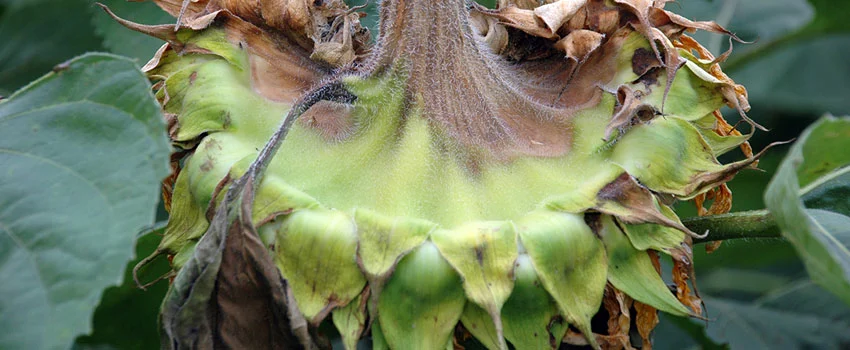
Understanding Iprodione Carbendazim 50% SC: Composition and Mode of Action
How the Dual Active Ingredients Work Together?
The product's main business edge is the way its parts work together to make it better. Carbendazim, whose chemical formula is C₉H₃N₃O₂ and EINECS No. 234-232-0, works throughout the body by stopping beta-tubulin polymerization during fungus mitosis. This stops cell division in human tissue. Iprodione works with this by stopping the production of fungus DNA and RNA at the touch level and stopping the growth of spores on the leaf surface. Together, they provide both a protective window of 10–14 days and kickback activity that can cure early infections. This is a huge benefit for commercial growers who have to deal with changing weather and infection windows.
Formulation Specifications That Matter for Procurement
Not just what the label says, but also its physical properties show how good an SC product is. The product must have a pH range of 5.0 to 8.0, a total active ingredient amount of at least 500 g/L, a suspensibility of at least 90%, and particles with a size D90 of less than 5 microns. The SC matrix made of water gets rid of the chemical solvents that may affect plant performance during sensitive growth stages like blooming. The color is off-white to beige, and the suspension is smooth and flowable. It re-suspends completely when stirred. Because of these qualities, it can be used with controlled droplet applicators, backpack units, and tractor boom sprayers without getting clogged up.
Usage Instructions and Safety Precautions for Optimal Performance
Application Rates and Timing Guidelines
Depending on the type of crop and the amount of disease pressure, the recommended dilution is usually between 1,000 and 1,500×. For greenhouse vegetables that like a lot of moisture, like tomatoes and cucumbers, the treatment starts when the flowers start to bloom, which is also when Botrytis activity is highest. In broad-acre rice rape, timing the plant right between early and mid-flowering saves the stems from Sclerotinia lesion growth. Dollar Spot and Brown Patch can be successfully controlled on grass and ornamentals by applying during times of warm and humid transition. Spraying every 10 to 14 days makes sure that the protection lasts for a long time without making the bug resistant through overexposure.
Proper application practice for the applicator is a must when using fungicide iprodione carbendazim 50% SC. During mixing and spraying, workers must wear nitrile gloves, protective glasses, and suitable chemical-resistant coveralls. Avoid using it when there is a lot of wind so that it doesn't spread beyond the intended application area. Always follow the pre-harvest interval, which can be anywhere from 3 to 7 days for veggies and longer for cereals, based on what the local label says.
Resistance Management Through Rotation
Carbendazim is a widely used chemical that belongs to a group of chemicals called MBC fungicides. Relying only on this mixture involves the use of resistant strains, especially in Botrytis populations that are known to show reduced sensitivity to benzimidazole. That resistance management benefit is strengthened when this product is used in a cycle with triazoles or strobilurins. The dual-mode-of-action design already lowers resistance pressure more than either active ingredient used by itself, but rotation is still the most important part of long-term disease management plans.
Comparing Iprodione Carbendazim 50% SC with Other Fungicides
Procurement professionals routinely evaluate this product against mancozeb and chlorothalonil, both of which lack systemic activity. The table below summarizes the critical differences:
- Mancozeb 80% WP—Has a broad protective range but no healing action. It leaves behind a heavy residue and requires careful handling during application. It also doesn't work with alkaline tank-mix partners.
- Chlorothalonil 75% WP—Strong touch protection on the leaf surface but no movement within plant tissue; not good for stopping dormant infections; becoming harder to get in the EU and some export markets.
- Fungicide Iprodione Carbendazim 50% SC—Both surface-contact sterilization and systemic translocation are achieved; the SC formulation creates smaller particles than WP alternatives, which leads to better leaf coverage and adhesion; the formulation generates less dust during handling; and the tank-mix compatibility is better at neutral pH.
These differences translate directly into procurement value. The SC formulation has more biological activity per unit volume than wettable powders, and because it doesn't wash off as easily, it stays effective longer after it rains, which lowers the number of times it needs to be applied and the overall cost per hectare.
Procurement Insights: Buying Iprodione Carbendazim 50% SC for Global B2B Clients
Quality Verification Protocols
To be sure of the exact ratio of Iprodione to Carbendazim, reliable purchase of fungicide iprodione carbendazim 50% SC needs active ingredient measurement that has been checked by HPLC. Buying rules should also include a wet sieve test, proof of suspensibility after 30 minutes of settling, and thermal stability tests at 54°C for 14 days and 0°C for 7 days. These CIPAC and FAO standard tests make sure that the product is still good after being shipped over long distances and stored in a building. This is especially important for buyers in Southeast Asia and Africa, where temperatures often rise above 35°C.
Supply Chain and Documentation Considerations
Buyers from around the world have to deal with import paperwork, phytosanitary certificates, Safety Data Sheets, and registration systems that are specific to each country. In the US, buyers should check to see if the product is registered with the EPA and if the MRL meets USDA/FDA standards. Buyers from government institutions usually need L/C payment terms and batch paperwork that can be tracked. When established wholesalers look for suppliers of 3–15 tons of formulated product, they should make sure that the seller can provide a Certificate of Analysis for each batch, data on how stable the product is in accelerated storage, and bioefficacy trial results that follow good laboratory practices.
Best Practices and Future Outlook
For this compound fungicide to be used in a sustainable way, it needs to be used in line with integrated disease management programs. This means that the chemical treatment needs to be coordinated with cultural controls like crop spacing, canopy management, and the time of irrigation to lower humidity and infection periods. With digital crop tracking tools, growers can now use disease-risk models that make spray decisions based on real-time weather data instead of calendar plans. This lowers the total amount of fungicide used while keeping its effectiveness.
As we look ahead, regulations in mature markets are getting stricter on residue MRL requirements and closely looking at benzimidazole residues in food products. Long-term buyers should plan for changes in formulations, such as microencapsulated SC formats and biological integration, and work with suppliers who can help them create next-generation combination products that are specific to changing pathogen sensitivity profiles in their region.
Conclusion
Fungicide iprodione carbendazim 50% SC has been used for a long time in industrial projects to control diseases in grains, veggies, oilseed crops, turf, and ornamentals. It has two different ways of working chemically, and the SC formulation benefits—better susceptibility, consistent plant compatibility, and longer rainfastness—make it a good choice for bulk purchases. Its usefulness in resistance control, wide crop compatibility, and post-harvest utility make it even more useful in a wide range of agricultural markets. Buyers who use standard testing methods to make sure the quality of the recipe and add this product to rotation-based programs can expect it to work the same way all season long.
FAQ
1. What dilution rate is recommended for vegetable crops?
For most vegetable uses, a reduction of 1,000 to 1,500× is fine. Use at the first sign of disease or when disease activity is likely to increase, like when the plant is flowering or when it is very humid. Rates should always be checked against the registered local label.
2. Can this product be used in post-harvest applications?
Carbendazim has been shown to work in situations where food is stored after it has been harvested. Compatibility with certain post-harvest practices relies on the type of crop and the approval of the local government. Before using in products that will be exported, make sure they follow the MRL.
3. Is this formulation compatible with other pesticides?
It's best not to mix a Bordeaux blend with things that are alkaline. Both of the active ingredients break down quickly in alkaline environments, meaning they lose their effectiveness. Before you try a new tank-mix mixture, make sure the jars can work together.
4. What should I do if sedimentation appears in the container?
Turn the container upside down and shake it really hard. The product will still work if the sediment is resuspended into a uniform suspension. If your formulation's quality is compromised by hard caking that doesn't break up, you should call your provider right away.
Source: Hontai's Iprodione Carbendazim 50% SC—Request a Sample Today
Based in Shijiazhuang, China, Hontai is a dedicated fungicide iprodione carbendazim 50% SC maker that sells formulated products and technical concentrates to wholesalers, OEM brand owners, and institutional buyers all over the world. Our SC formula meets FAO/CIPAC quality standards, and we offer flexible packaging, labels that can be changed, and expert help 24 hours a day, 7 days a week. Our team is ready to help you, whether you need a test sample or a large order. To get prices and product information, email us at admin@hontai-biotech.com.
References
1. Leroux, P. (2004). Fungicide resistance in plant pathogens. Phytochemistry Reviews, 3(1–2), 119–134.
2. Brent, K. J., & Hollomon, D. W. (2007). Fungicide Resistance in Crop Pathogens: How Can It Be Managed? FRAC Monograph No. 1, 2nd Edition. Fungicide Resistance Action Committee.
3. FAO/WHO. (2016). Pesticide residues in food—Carbendazim. Joint FAO/WHO Meeting on Pesticide Residues (JMPR) Evaluations.
4. CIPAC. (2003). Collaborative International Pesticides Analytical Council: MT 46.3 Suspensibility of Suspension Concentrates. CIPAC Handbook Volume H.
5. Pappas, A. C. (1997). Dicarboximide fungicides—mechanisms of resistance. Pesticide Science, 51(3), 248–252.
6. Hewitt, H. G. (1998). Fungicides in Crop Protection. CAB International, Wallingford, UK.
Our customers’ satisfaction speaks for our quality — contact us to experience the same reliable service.