- English
- French
- German
- Portuguese
- Spanish
- Russian
- Japanese
- Korean
- Arabic
- Greek
- German
- Turkish
- Italian
- Danish
- Romanian
- Indonesian
- Czech
- Afrikaans
- Swedish
- Polish
- Basque
- Catalan
- Esperanto
- Hindi
- Lao
- Albanian
- Amharic
- Armenian
- Azerbaijani
- Belarusian
- Bengali
- Bosnian
- Bulgarian
- Cebuano
- Chichewa
- Corsican
- Croatian
- Dutch
- Estonian
- Filipino
- Finnish
- Frisian
- Galician
- Georgian
- Gujarati
- Haitian
- Hausa
- Hawaiian
- Hebrew
- Hmong
- Hungarian
- Icelandic
- Igbo
- Javanese
- Kannada
- Kazakh
- Khmer
- Kurdish
- Kyrgyz
- Latin
- Latvian
- Lithuanian
- Luxembou..
- Macedonian
- Malagasy
- Malay
- Malayalam
- Maltese
- Maori
- Marathi
- Mongolian
- Burmese
- Nepali
- Norwegian
- Pashto
- Persian
- Punjabi
- Serbian
- Sesotho
- Sinhala
- Slovak
- Slovenian
- Somali
- Samoan
- Scots Gaelic
- Shona
- Sindhi
- Sundanese
- Swahili
- Tajik
- Tamil
- Telugu
- Thai
- Ukrainian
- Urdu
- Uzbek
- Vietnamese
- Welsh
- Xhosa
- Yiddish
- Yoruba
- Zulu
What is Dimethomorph used for?
share:
Dimethomorph is a carboxylic acid amide fungicide classified under FRAC Group 40, and it works by blocking cellulose synthesis in oomycete cell walls. In practical terms, dimethomorph 50% WP delivers targeted, curative, and protective control against Phytophthora infestans on potatoes and tomatoes, Plasmopara viticola on grapes, and Pseudoperonospora cubensis on cucurbits. Applied at 1.0–1.5 kg/ha in 7–10 day intervals, it remains highly active at low doses while fitting cleanly into resistance-management rotation programs alongside multi-site fungicides.
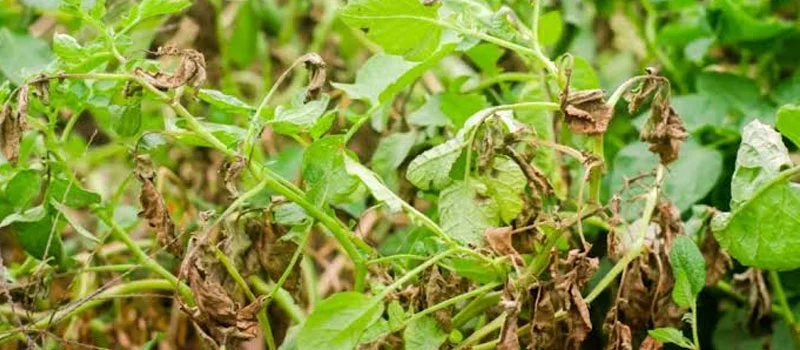
Understanding Dimethomorph 50% WP: Uses and Mode of Action
How It Targets Oomycete Pathogens?
dimethomorph 50% WP is a pesticide that only works on oomycete fungi. It doesn't do anything useful for real fungi like Botrytis or Fusarium. Precision is what it does best. It stops sporangia formation, hyphal growth, and spore generation all at the same time by blocking cellulose synthase, an enzyme that is missing from true fungi but necessary for oomycetes. Because it stops spores from spreading, growers can see clean, disease-free leaves even when there are a lot of diseases around if they use the product to avoid diseases or within 72 hours of an infection.
Proven Crop Applications
Dimethomorph 50% WP is registered on a lot of different crops that are important for business in North America and Europe. Because it moves translaminarly, it goes through leaf tissue and protects both leaf surfaces without covering the whole canopy. Some important uses are
- Potato and tomato late blight: P. infestans can kill an open potato field in just a few days if it's humid. In studies published in Pest Management Science, dimethomorph 50% WP and mancozeb were used alternately in four applications to control diseases with 87 to 93% success.
- Grape downy mildew: Vineyards in France, Italy, and California use CAA fungicides during the blooming to berry-set window, which is the time when the chance of Plasmopara viticola infections is highest. The dimethomorph 50% WP mixture mixes evenly in water and reliably covers the underside of the leaf, which is where germs grow.
- Cucurbit downy mildew: Pseudoperonospora cubensis spreads quickly when it's warm and wet on cucumber, melon, and watermelon crops. In the Southeast of the United States, greenhouse and open-field co-ops are rotating dimethomorph 50% WP more and more.
- Onion and brassica downy mildew: Peronospora species that affect alliums and crucifers, especially in cool marine production areas, are also used in a secondary but economically important way.
A problem that all of these uses have in common is that oomycete fungi are resistant to phenylamide fungicides. This has been known around the world since the 1980s, so dimethomorph 50% WP's unique process is not a choice but a requirement.
Application Guidelines, Safety, and Environmental Considerations
The right application leads to results. The standard field rate for the dimethomorph 50% WP is 1.0 to 1.5 kg/ha, which is equal to 500 to 750 g of active ingredient per hectare. This is sprayed on the leaves every 7 to 10 days when disease pressure is high. You should avoid using the same fungicide four times in a row without switching to a different FRAC group. For this purpose, cymoxanil, fluopicolide, or a multi-site fungicide like chlorothalonil or mancozeb work well.
Because the wettable powder has very small particles—about 98% of it goes through a 325-mesh screen—it needs to be stirred up all the time in the tank so that the particles stay evenly distributed. The temperature of storage should stay below 35°C, and it should be kept out of direct sunlight and water. As long as the ingredients are stored properly, they will last for two years without losing much of their active ingredients.
Dimethomorph 50% WP has a defined environmental profile in relation to mammals, birds, and insects. Because its half-life in the soil is usually between 7 and 30 days, based on soil moisture and microbial activity, it can be used in integrated pest control systems while considering its soil degradation profile.
Comparing Dimethomorph 50% WP With Other Fungicides
Metalaxyl and mefenoxam are often near the top of growers' lists when they are looking at ways to stop late blight and downy mildew. There is a high chance that both will not work against P. infestans because they are phenylamides and have been shown to be resistant in the field in parts of Latin America, Europe, and the United States. As a CAA fungicide, dimethomorph 50% WP has a defined resistance profile and works in a totally different way. This is why CropLife International's instructions for managing resistance say to switch between FRAC groups.
The dimethomorph 50% WP format requires half as much product per treatment as the 25% WP format. This cuts down on packing waste and lowers the cost per acre for bulk buyers. The 50% WDG variant is best for businesses that use automated spray systems or want to mix their products without dust. It has the same amount of active ingredient and breaks down quickly, as well as better suspensibility above 90% by CIPAC MT 161 standards. The 250 SC works with liquid injection systems and stays waterproof for as little as one to two hours after application thanks to adjuvants that are already built in.
Tank-mix mixtures add even more value. When dimethomorph 50% WP is mixed with mancozeb, it adds broad-spectrum protection. When it is mixed with cymoxanil, it increases kick-back activity inside the plant. When it comes to high-value crops like wine grapes, where disease management is an important production consideration, these combos are especially useful.
Procurement Guide for Dimethomorph 50% WP
Agrochemical wholesalers and crop protection co-ops in the U.S. usually get dimethomorph 50% WP on framework contracts that start with the growing season in the spring or the start of the rainy season. Standard commercial packaging includes water-soluble sachets of 100 g, 500 g, and 1 kg, as well as 20 kg fiber drums for bulk accounts. These setups work well for both small growers who work on their own and large operations that work together.
Quality control can't be skipped. Manufacturers you can trust give you certificates of analysis that show the active ingredient content is within ±2.5% of what the label says it is, that the product is suspensible above 80% of the time, and that it has accelerated stability data from storage trials at 54°C following CIPAC MT 46 protocols. OEM and custom-label buyers should ask for stable records at 25°C, 35°C, and 54°C, as well as EU MRL dossier support, if they want to sell their products in foreign markets.
Suppliers with a good reputation also offer a range of formulation options, such as 50% WDG, 250 SC, and multi-active combinations. They may also offer NDA agreements for exclusive regional packaging. As important as comparing prices is figuring out how much technical paperwork a seller has and how much post-sale agronomic help they can offer.
Conclusion
One of the biggest problems in current crop security is getting rid of oomycete pathogens that are resistant to older classes of fungicides. Dimethomorph 50% WP solves this problem. It works well on potatoes, tomatoes, grapes, and cucurbits because it has a focused mode of action, a low effective amount, translaminar movement, and can be mixed with a number of other chemicals. Knowing what dimethomorph 50% WP is used for and where to get it correctly is the first step in making a good crop protection plan, whether you are dealing with disease pressure on thousands of acres or making a custom rotation program.
FAQ
1. Does dimethomorph work against all fungal diseases?
No, dimethomorph 50% WP only picks out oomycete viruses. It gets rid of downy mildews and late blight caused by Phytophthora and Peronospora species, but it doesn't do anything for powdery mildew or gray mold, which are true fungi.
2. How many times can I apply dimethomorph per season?
According to rules for resistance management, you shouldn't apply more than three or four times in a row. Between dimethomorph 50% WP use blocks, you should always switch to fungicides from different FRAC groups.
3. Can dimethomorph 50% WP be tank-mixed with copper products?
Yes, copper fungicides usually work well with it. Before mixing on a large scale, you should always do a jar compatibility test. This is especially important when mixing copper hydroxide or copper oxychloride powders.
4. What is the pre-harvest interval?
PHI is different for each crop and registration area. For veggies, it usually takes 7–14 days, and for grapes, it takes 21–28 days. Always check to see what label requirements your state or export market has.
Partner With Hontai for Verified Dimethomorph 50% WP Supply
Hebei Hontai Biotech Co., Ltd. sells dimethomorph 50% WP that is approved by a maker and comes with full HPLC analysis, accelerated stability data, and labels that can be read in more than one language. Our team quickly answers requests for samples and bulk quotes. We offer WP, WDG, and SC formulations, as well as OEM packages for niche markets. To get a datasheet and start the procurement process right away, email our team at admin@hontai-biotech.com.
References
1. Gisi, U., & Sierotzki, H. — Oomycete Fungicides: Phenylamides, Quinone Outside Inhibitors, and Carboxylic Acid Amides — Fungicide Resistance in Plant Pathogens, Springer, 2015.
2. Cohen, Y., Rubin, E., & Gisi, U. — Sensitivity of Plasmopara viticola to Carboxylic Acid Amide Fungicides — Pest Management Science, 2008.
3. Hu, J., Pang, Z., & Shim, W.—Mechanisms of Resistance in Phytophthora infestans to Phenylamide and CAA Fungicides—Phytopathology, 2010.
4. FRAC (Fungicide Resistance Action Committee) — CAA Fungicides: Mode of Action and Resistance Risk Classification — FRAC Code List, 2023.
5. Cooke, L.R., Schepers, H.T.A.M., & Hermansen, A. — Epidemiology and Integrated Control of Potato Late Blight in Europe — Potato Research, 2011.
6. Genet, J.L., Jaworska, G., & Deprez, F.—Sensitivity in French Populations of Plasmopara viticola to Dimethomorph and Pyrimorph—Pest Management Science, 2006.
Our customers’ satisfaction speaks for our quality — contact us to experience the same reliable service.