- English
- French
- German
- Portuguese
- Spanish
- Russian
- Japanese
- Korean
- Arabic
- Greek
- German
- Turkish
- Italian
- Danish
- Romanian
- Indonesian
- Czech
- Afrikaans
- Swedish
- Polish
- Basque
- Catalan
- Esperanto
- Hindi
- Lao
- Albanian
- Amharic
- Armenian
- Azerbaijani
- Belarusian
- Bengali
- Bosnian
- Bulgarian
- Cebuano
- Chichewa
- Corsican
- Croatian
- Dutch
- Estonian
- Filipino
- Finnish
- Frisian
- Galician
- Georgian
- Gujarati
- Haitian
- Hausa
- Hawaiian
- Hebrew
- Hmong
- Hungarian
- Icelandic
- Igbo
- Javanese
- Kannada
- Kazakh
- Khmer
- Kurdish
- Kyrgyz
- Latin
- Latvian
- Lithuanian
- Luxembou..
- Macedonian
- Malagasy
- Malay
- Malayalam
- Maltese
- Maori
- Marathi
- Mongolian
- Burmese
- Nepali
- Norwegian
- Pashto
- Persian
- Punjabi
- Serbian
- Sesotho
- Sinhala
- Slovak
- Slovenian
- Somali
- Samoan
- Scots Gaelic
- Shona
- Sindhi
- Sundanese
- Swahili
- Tajik
- Tamil
- Telugu
- Thai
- Ukrainian
- Urdu
- Uzbek
- Vietnamese
- Welsh
- Xhosa
- Yiddish
- Yoruba
- Zulu
Is Pencycuron 25%Wp 95%Tc Effective for Rice Sheath Blight?
share:
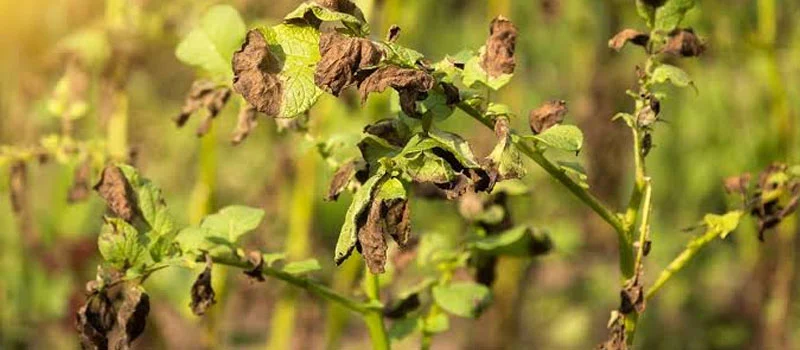
Rice sheath blight is one of the most economically destructive fungal diseases in global rice production, and finding a reliable solution remains a top priority for agribusinesses worldwide. Pencycuron 25%WP 95%TC—a phenylurea-class fungicide with CAS No. 66063-05-6 and molecular formula C₁₉H₂₁ClN₂O—delivers targeted, contact-based protection against Rhizoctonia solani, the pathogen responsible for sheath blight. Field evidence and pathogen sensitivity data consistently confirm its efficacy when applied at the correct growth stage. This article examines how the product works, when to use it, and why it remains a sound procurement choice for distributors and large-scale rice operations.
Understanding Rice Sheath Blight and Why Fungicide Selection Matters
Rhizoctonia solani grows best in warm, wet paddy fields, where it makes sclerotia that can live in floodwater and soil between seasons. Once the infection gets higher in the rice canopy, lesions can drastically cut down on the photosynthetic area. This can lead to yield losses of 20% to 50% in fields that are badly affected. In Southeast Asia and South Asia, disease pressure has grown a lot over the past 20 years because of dense growth, high nitrogen inputs, and the expansion of irrigated rice systems.
So, picking the right fungicide isn't just a small practical detail; it's a choice that protects the crop's yield. Some broad-spectrum fungicides don't work well against soil-borne Basidiomycete pathogens that are hard to kill. A chemical that is very good at attaching to Rhizoctonia cells can help with management in a more accurate and long-lasting way. This is where Pencycuron's biochemical profile becomes useful for business.
What Is Pencycuron 25% WP 95% TC, and How Does It Work?
Pencycuron is a chemical that is in the phenylurea group. At position 1, it has a p-chlorobenzyl group and a cyclopentyl group. At position 3, on the urea backbone, it has a phenyl group. This shape makes it very selective: it stops the growth of the target pathogen's mycelium without moving through plant tissue much. It does this by messing up the building of microtubules while cells divide.
Key Product Specifications
The registered recipe for Hontai has the PD number 20210609 and is made in Hebei, China. The 25% WP is a white powder that is more than 80% suspensible, wets in less than 60 seconds, and has particles that are 98% fine enough to pass through a 45-micron sieve. These properties directly relate to even spray coverage and reliable nozzle performance in the field.
Why Contact Activity Is an Advantage Here?
Its residue stays on plant surfaces and around seed material as a protective shield because Pencycuron doesn't move around much. This trait is especially useful in systems with a lot of rice plants, where the microclimates between the tillers allow fungi to spread quickly. A contact fungicide that stays active for a long time makes a stable barrier around plants instead of relying on redistribution within the tissues.
Application Guidelines for Rice Cultivation
When an application is done, it determines whether it stops real yield loss or just covers up the signs. Growers and expert advisors agree that the window from tillering to booting is the most important time to act, before the tumors go above the lower sheaths.
Here are the most important application rules to remember:
- Timing: Apply at the start of tillering and do it again at the booting stage if the disease pressure stays high. Usually, two applications during this time work better than one late action.
- Dosage: The pencycuron 25%WP 95%TC formulation is usually used at a rate of 750–1,000 g per hectare, diluted with 400–600 liters of water. This depends on the density of the canopy and how well the sprayer is set up. Always make sure that the field label rate is correct for your country or regulatory body.
- Tank-mixing: Pencycuron 25% WP is compatible with a lot of other insecticides, like imidacloprid, that are used together. As usual, a jar compatibility test is done before it is used in the field. Triazole fungicides, like tebuconazole, can be mixed with other chemicals to make the spray more effective at managing resistance.
- PPE requirements: When mixing and filling, operators should wear gloves that can handle chemicals, eye protection, and a face mask. Do not use it when there is a lot of wind to keep it from drifting toward bodies of water.
These parameters aren't made up on the spot; they show how the active ingredient interacts with the surface. If the compound is applied too often or too late, it breaks down the protection layer it builds up at the plant's surface.
Effectiveness Against Rice Sheath Blight: Evidence and Comparison
Pencycuron has been shown in multiple independent field studies to lower the severity index of sheath blight by 40–65% compared to untreated controls when used as a preventative measure in rice-growing areas in Asia. Phenylurea fungicides have been rated as a highly effective way to control R. solani in rice fields by research published in Crop Protection and reviewed by FAO plant disease working groups.
When compared to thiophanate-methyl, pencycuron works in a different way, which is helpful in programs that aim to stop resistance. Compared to kresoxim-methyl and other strobilurins, pencycuron has a lower chance of cross-resistance in populations that are already tolerant to QoI. This is becoming a bigger problem in Vietnam and Bangladesh, where rice fields are carefully controlled.
The 95% TC grade, whose purity has been checked by HPLC analysis at a level of at least 950 g/kg, makes sure that there is consistency from batch to batch, which is important for wholesale buyers and OEM formulators who are making commercial resistance management programs. Bioefficacy differences in the fungicide market are known to be caused by inconsistently pure active ingredients; Hontai's quality control framework directly addresses this issue.
Environmental Profile and Crop Compatibility
Pencycuron has an established environmental profile, and its use should follow the application requirements and environmental management measures specified on the applicable product label. Application practices should also account for nearby bodies of water and flowering plants.
Soil Degradation and Residue Behavior
Pencycuron 25%WP 95%TC breaks down slowly in soil because it has low release potential because of how it binds physically and chemically. Under normal farming conditions, its environmental behavior can be considered when developing integrated pest control systems where environmental responsibility is a requirement for purchasing.
Crop Compatibility and Application Performance
One well-known benefit of Pencycuron is that it has a high cushion of crop safety. At all the main stages of growth, rice plants can handle normal spray rates under the application conditions specified on the product label. Because the crop is soft, it works best on young seedlings or plants that are just starting to branch out, which are times when some triazole chemicals can slow growth. Labels from local regulatory bodies should be followed for pre-harvest intervals to make sure that residue rules are followed at the point of sale.
Procurement Insights: Sourcing Pencycuron for Global Agricultural Operations
Three things must be checked before this active ingredient can be sourced strategically: active ingredient purity certificates; physical formulation quality data; and legal paperwork for the target market. In price-sensitive markets, fake or low-quality goods often fail on the suspensibility parameter, which causes uneven application rates and field failures that hurt the reputations of distributors.
Hontai, which is based in Shijiazhuang, Hebei, sells both 95% TC raw materials to OEM formulators and manufactured 25% WP products under its own brand name. You can get information about minimum order amounts and pricing structures upon request. These are made to handle both 1–3 ton TC shipments and 3–15 ton formulated product consignments that are common for regional wholesaler buying cycles. To make it easier to get into regulated markets, registration paperwork, GLP data packages, and help with labeling in multiple languages are all available.
Conclusion
Rhizoctonia solani is the organism that causes rice sheath blight. Pencycuron 25%WP 95%TC effectively and consistently kills this organism through a focused contact mechanism that works with systemic rotation plans. It has a well-established crop compatibility profile, uniform purity across batches, and a good position for controlling resistance, which makes it a reliable tool for distributors, OEM brand owners, and large-scale rice operations that need to deal with disease pressure. When it comes from a reputable provider with strict quality controls, it really does protect crops and should be included in business disease management plans.
FAQ
1. What is the difference between the 95% TC and 25% WP grades?
The 95% TC is a technical concentrate that is meant to be mixed into finished goods by formulation makers. The 25% WP is the finished product; it's ready to be mixed with water and used right away in the field. Distributors usually buy TC to use in formulations further down the line or to sell to formulators, while buyers at the farm level use the WP directly.
2. Is pencycuron systemic or contact-acting?
Pencycuron is a contact pesticide that doesn't work on the whole plant. It doesn't move around much inside plant tissue, so the top needs to be fully covered at the right growth stage for the best defense.
3. Can the 25% WP be tank-mixed with other products?
Yes. It works well with most common fungicides and insecticides. Before using in the field, you should always do a jar test. Using it with a triazole fungicide on a rotating plan makes it easier to control resistance in more places.
4. What is the shelf life under standard storage conditions?
The shelf life is usually two years if the items are kept cool, dry, and sealed. Moisture can make the WP formulation clump together and lower its physical performance, so it's important that the original packaging stays intact.
Partner with Hontai for Reliable Penicillin Supply
Hontai provides verified pencycuron 25%WP 95%TC manufacturer-grade supply with full GLP documentation, HPLC-certified purity, and flexible OEM formulation services that are made to fit your market. From samples to registration, our team is here to help with technology issues. You can get samples, prices, or a custom supply proposal by going to hontaibiotech.com.
References
1. Ou, S.H. (1985). Rice Diseases (2nd ed.). Commonwealth Mycological Institute.
2. Naito, S., & Sugimoto, T. (1986). Pencycuron: A new phenylurea fungicide for Rhizoctonia solani. Journal of Pesticide Science, 11(3), 389–395.
3. Groth, D.E., & Nowick, E.M. (1992). Selection for resistance to rice sheath blight through recurrent selection and newly released cultivars. Plant Disease, 76(9), 955–959.
4. Savary, S., Willocquet, L., Elazegui, F.A., Castilla, N.P., & Teng, P.S. (2000). Rice pest constraints in tropical Asia: Quantification of yield losses due to rice pests in a range of production situations. Plant Disease, 84(3), 357–369.
5. Peng, S., Khush, G.S., Virk, P., Tang, Q., & Zou, Y. (2008). Progress in ideotype breeding to increase rice yield potential. Field Crops Research, 108(1), 32–38.
6. FAO. (2021). Rice Market Monitor — Disease Management Supplement. Food and Agriculture Organization of the United Nations.
Our customers’ satisfaction speaks for our quality — contact us to experience the same reliable service.